Generative AI (Gen AI) is no longer a futuristic concept but a critical technology driving transformation in the manufacturing industry. With the capacity to enhance efficiency, innovation, and customization, Gen AI solutions are continually evolving, bringing new capabilities to the manufacturing floor. This article delves into the latest developments in Generative AI solutions for manufacturing, exploring how these advancements are setting new standards in the industry.
Introduction: The Impact of Generative AI on Manufacturing
What is Generative AI?
Generative AI refers to a subset of artificial intelligence that focuses on creating new content, designs, and solutions from existing data. Unlike traditional AI, which follows predefined rules, Generative AI models can generate innovative outcomes, making them highly valuable in industries where creativity and optimization are crucial.
The Growing Importance of Gen AI in Manufacturing
In the manufacturing sector, Gen AI solution for manufacturing are increasingly being adopted to revolutionize product design, streamline production processes, optimize supply chains, and enhance quality control. As technology advances, it is opening up new possibilities for manufacturers to improve efficiency, reduce costs, and deliver more personalized products to customers.
Latest Developments in Gen AI Solutions for Manufacturing
1. AI-Driven Generative Design
1.1 Evolution of Generative Design Tools
Generative design has seen significant advancements, with AI-driven tools becoming more sophisticated and user-friendly. These tools can now analyze complex parameters such as material properties, manufacturing constraints, and performance requirements to generate multiple design options. This allows manufacturers to explore innovative designs that would be difficult to conceive manually.
1.2 Integration with Additive Manufacturing
One of the latest trends is the integration of generative design with additive manufacturing (3D printing). AI-generated designs can be directly translated into 3D-printed components, enabling the production of complex geometries that were previously impossible to manufacture. This integration is leading to more efficient and sustainable production processes, particularly in industries like aerospace and automotive.
2. Advanced AI-Powered Predictive Maintenance
2.1 Real-Time Predictive Analytics
Predictive maintenance has been a game-changer in manufacturing, and recent developments in AI are enhancing its capabilities. Advanced AI algorithms can now process real-time data from sensors and IoT devices to predict equipment failures with greater accuracy. This allows manufacturers to schedule maintenance before a failure occurs, minimizing downtime and extending the lifespan of machinery.
2.2 AI-Enhanced Digital Twins
The concept of digital twins—virtual replicas of physical assets—has been further refined with AI enhancements. These AI-driven digital twins can simulate real-world conditions in real-time, providing insights into potential equipment failures or process inefficiencies. Manufacturers are leveraging this technology to optimize maintenance schedules, improve operational efficiency, and reduce costs.
3. Generative AI for Process Optimization
3.1 AI-Driven Process Automation
Process optimization has always been a key focus in manufacturing, and recent advancements in Generative AI are taking automation to new levels. AI-driven process automation tools can now analyze entire production workflows, identify bottlenecks, and suggest optimizations. This results in faster production times, reduced waste, and lower operational costs.
3.2 Adaptive AI Systems
Adaptive AI systems represent a significant leap forward in process optimization. These systems can learn from ongoing operations and adjust parameters in real-time to optimize performance. For instance, in a complex assembly line, adaptive AI can dynamically alter production speeds, material usage, and quality checks to maximize efficiency and minimize errors.
4. AI-Driven Supply Chain Optimization
4.1 AI-Enhanced Demand Forecasting
Accurate demand forecasting is crucial for effective supply chain management, and AI is playing a pivotal role in this area. Recent developments have led to the creation of AI models that can analyze large datasets, including historical sales data, market trends, and external factors such as economic indicators. These models provide more accurate demand forecasts, allowing manufacturers to better align production with market needs.
4.2 AI-Powered Supply Chain Resilience
In response to the increasing complexity of global supply chains, AI-powered resilience tools have been developed. These tools use AI to simulate various disruption scenarios, such as natural disasters or geopolitical events, and provide manufacturers with actionable insights to mitigate risks. By proactively managing supply chain risks, manufacturers can ensure continuity in production and reduce the impact of unforeseen events.
5. Human-AI Collaboration in Manufacturing
5.1 AI-Augmented Decision-Making
One of the most exciting developments in Gen AI solution for manufacturing is the enhancement of human-AI collaboration. AI-augmented decision-making tools are designed to assist workers and managers in making more informed decisions. These tools analyze data from multiple sources and provide real-time recommendations, helping humans make better decisions faster.
5.2 AI-Driven Workforce Training
AI-driven training platforms are becoming increasingly important in manufacturing. These platforms use AI to assess workers’ skills and create personalized training programs. Additionally, AI can simulate complex manufacturing scenarios, allowing workers to gain practical experience in a controlled environment. This leads to a more skilled and adaptable workforce, ready to handle the challenges of modern manufacturing.
6. Generative AI for Sustainable Manufacturing
6.1 AI-Driven Sustainable Product Design
Sustainability is a growing concern for manufacturers, and AI is playing a crucial role in addressing this challenge. Recent developments in AI-driven sustainable product design focus on optimizing material usage, reducing waste, and minimizing energy consumption. AI can analyze the environmental impact of different design choices, helping manufacturers create products that are both efficient and environmentally friendly.
6.2 AI for Energy Optimization
Energy optimization is another area where Generative AI is making significant strides. AI algorithms can now analyze energy consumption patterns across the entire manufacturing process and identify opportunities for energy savings. By optimizing energy usage, manufacturers can reduce their carbon footprint and lower operational costs, contributing to a more sustainable production process.
7. Enhanced Quality Control through AI
7.1 AI-Powered Visual Inspection Systems
Quality control is critical in manufacturing, and AI-powered visual inspection systems have significantly advanced in recent years. These systems use deep learning algorithms to detect defects and anomalies in products with remarkable accuracy. Unlike traditional inspection methods, which can be time-consuming and prone to human error, AI-driven systems can process large volumes of data quickly and consistently, ensuring that only high-quality products reach the market.
7.2 Automated Quality Assurance
Beyond visual inspection, AI is being used to automate various aspects of quality assurance. For instance, AI can analyze data from production processes in real-time to detect variations that could impact product quality. By providing instant feedback, these systems enable manufacturers to address issues before they escalate, reducing the likelihood of defects and improving overall product quality.
8. AI-Driven Customization and Personalization
8.1 Mass Customization with Generative AI
Mass customization, the ability to produce personalized products at scale, is becoming increasingly feasible thanks to Generative AI. Recent advancements allow manufacturers to use AI to design and produce custom products that meet individual customer specifications without sacrificing efficiency. This capability is particularly valuable in industries such as consumer goods and automotive, where personalization is a key differentiator.
8.2 AI-Enabled On-Demand Manufacturing
On-demand manufacturing is another area where AI is making a significant impact. AI-driven systems can manage the entire production process for custom orders, from design to manufacturing to delivery. This approach reduces inventory costs and waste, as products are only made when there is a confirmed demand. It also enables manufacturers to respond quickly to market changes and customer preferences.
9. Collaborative Robotics (Cobots) Powered by AI
9.1 AI-Enhanced Cobots for Manufacturing
Collaborative robots, or cobots, are robots designed to work alongside human workers. Recent developments in AI have enhanced the capabilities of cobots, making them more adaptable and safer to work with. AI-powered cobots can learn from human operators, adjusting their actions based on feedback and real-time data. This collaboration between humans and AI-driven robots is leading to more flexible and efficient manufacturing processes.
9.2 AI-Powered Human-Robot Interaction
The interaction between humans and robots is becoming more seamless thanks to AI advancements. AI algorithms are being used to improve the way cobots understand and respond to human commands, making them more intuitive to use. This enhanced interaction is reducing the learning curve for workers and enabling more effective collaboration between humans and machines on the factory floor.
10. The Role of AI in Smart Manufacturing Ecosystems
10.1 AI-Powered Smart Factories
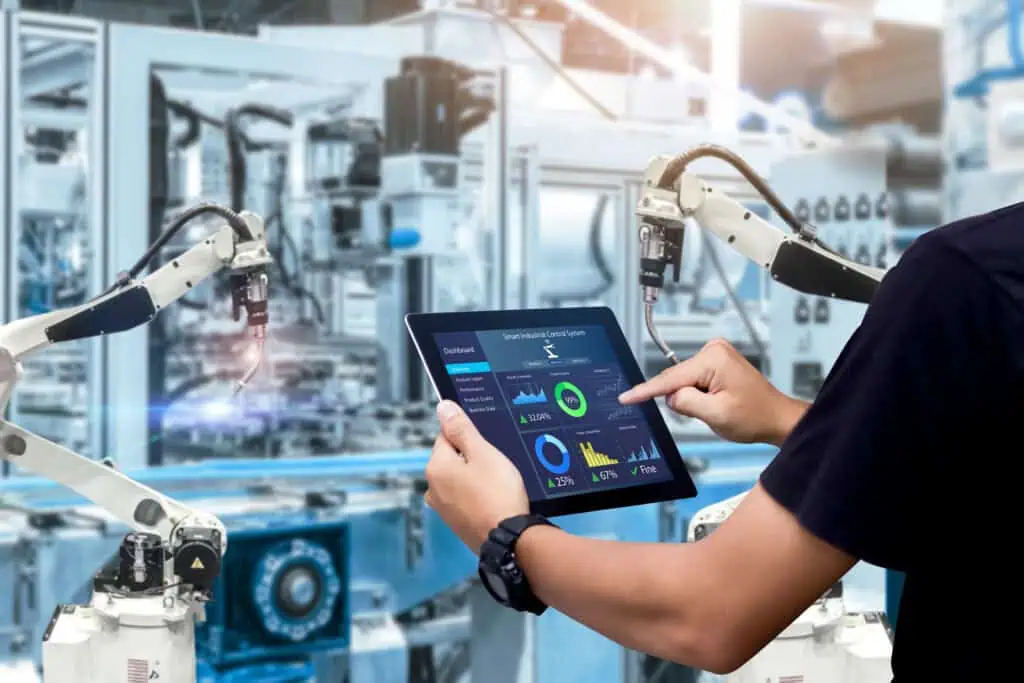
Smart factories, where every aspect of production is interconnected and automated, are becoming a reality with the help of AI. Recent developments in AI are enabling manufacturers to create fully integrated systems where machines, sensors, and software work together to optimize production in real-time. These AI-powered ecosystems can adapt to changes in demand, material availability, and other factors, ensuring that production is always running at peak efficiency.
10.2 AI-Driven Supply Chain Integration
AI is also playing a crucial role in integrating supply chains with smart manufacturing ecosystems. By analyzing data from suppliers, logistics providers, and customers, AI can optimize the flow of materials and products throughout the supply chain. This integration leads to more responsive and resilient supply chains, capable of adapting to disruptions and changing market conditions.
Conclusion: The Future of Generative AI in Manufacturing
Generative AI is transforming the manufacturing industry, driving innovation, efficiency, and sustainability. As AI technology continues to advance, its impact on manufacturing will only grow, offering new opportunities for companies to improve their processes, products, and competitive edge. The latest developments in Generative AI solutions are not just enhancing current capabilities but are also paving the way for a future where manufacturing is more adaptive, personalized, and sustainable.
Future Outlook: What’s Next for Gen AI in Manufacturing?
Looking ahead, we can expect even more sophisticated AI tools that integrate seamlessly with existing systems and processes. These advancements will likely include greater use of AI in areas like autonomous production, real-time supply chain optimization, and advanced robotics. As these technologies mature, manufacturers will be able to achieve levels of efficiency and innovation that were previously unimaginable.
The continuous evolution of Generative AI in manufacturing signals a future where AI is not just an enabler but a core component of the manufacturing process. Companies that embrace these developments will be well-positioned to lead the industry in the coming years, setting new standards for innovation and excellence.

